
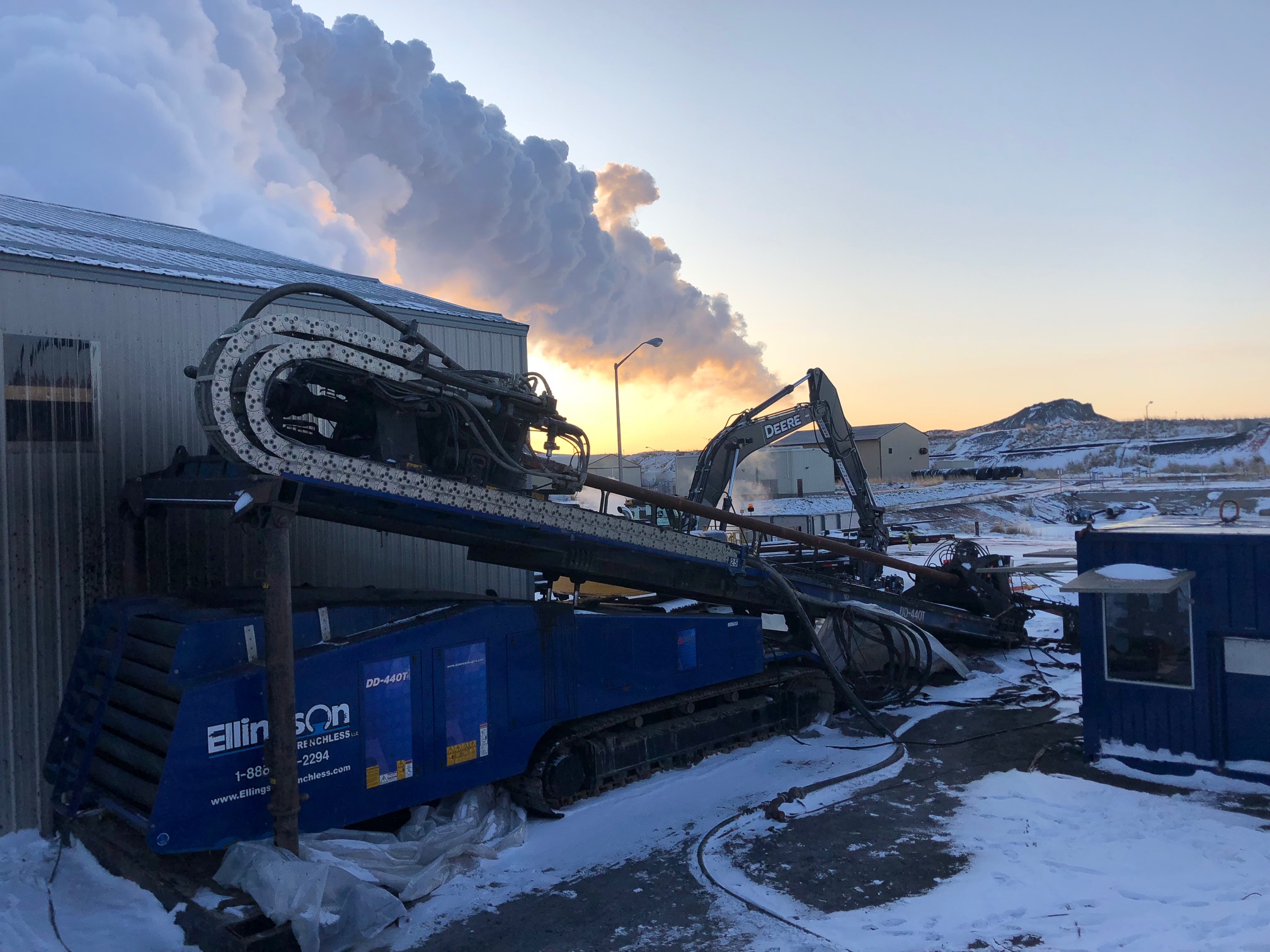
Flue Gas Desulfurization (FGD) is the process for removing sulfur dioxide (SO2) from the exhaust from coal burning power plants, but FGD systems also generate large volumes of wastewater and byproducts that require careful management. The wastewater from the process can contain contaminants including, trace heavy metals, fluorides/chlorides and high levels of total dissolved solids. The solid portions of the waste are defined as sludge. In some cases the sludge can be converted into gypsum which can be utilized to make products such as wall board.
In some instances the FDG wastewater and sludge is stored in unlined or lined ponds and leakage of the fluids to the subsurface and ground water has occurred.
One of the most effective and innovative solutions for addressing these potential subsurface contamination challenges is the use of horizontal wells.
Why Horizontal Wells at FGD Sites?
FGD sites often have complex layouts, limited surface access, and large pond/lagoon areas. Traditional vertical wells can be inefficient or impractical in these environments. Horizontal wells offer several advantages:
- Maximized Contact Area
Horizontal wells can span hundreds or even thousands of feet, providing greater coverage for groundwater extraction, injection, or treatment compared to vertical wells. - Reduced Surface Disruption
By drilling beneath active infrastructure, lagoons, or treatment basins, horizontal wells minimize interference with ongoing operations and reduce land disturbance. - Enhanced Performance for Remediation
Horizontal wells improve flow control and treatment efficiency for contaminants such as sulfates, chlorides, and trace metals often found in FGD wastewater.
Applications for FGD Sites
- Groundwater Containment and Control
Horizontal wells can lower water tables beneath sludge stacks or treatment ponds, preventing seepage and structural instability. - Leachate Collection
They provide an effective way to capture and manage leachate from byproduct storage areas without extensive excavation. - In-Situ Treatment
Horizontal wells can deliver reagents or oxygen to subsurface zones for chemical or biological treatment of impacted groundwater.
The Bottom Line Horizontal drilling technology is transforming how FGD sites manage water and environmental compliance. With the ability to install wells under challenging conditions and cover large areas efficiently, this approach offers both operational and environmental benefits.